Puzzling New Venom Strain Found In Southern California Rattlers

82

By GarnetBird

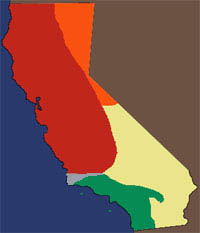
IN GREEN: shows the Range of the Southern Pacific Rattler in California.
See all 7 photos
IN GREEN: shows the Range of the Southern Pacific Rattler in California.
Source: Google.com/California Herps
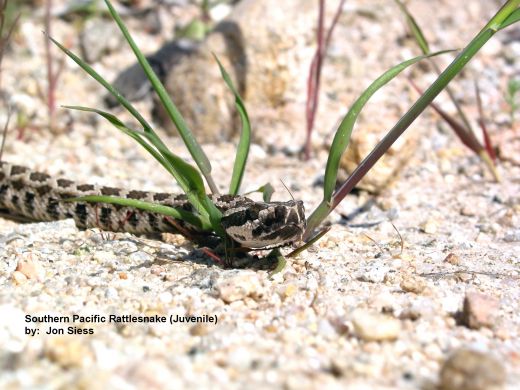
Juvenile Southern Pacific Rattler-photo taken by Lake Silverwood, California.
Source: Jon Siess, photographer
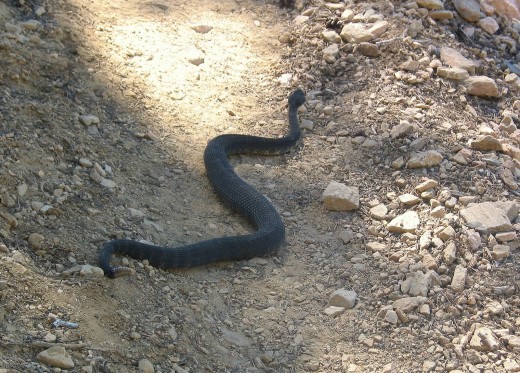
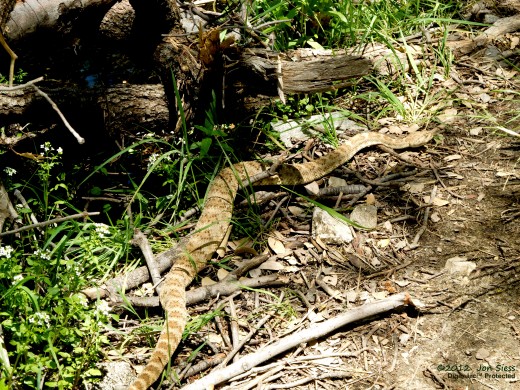
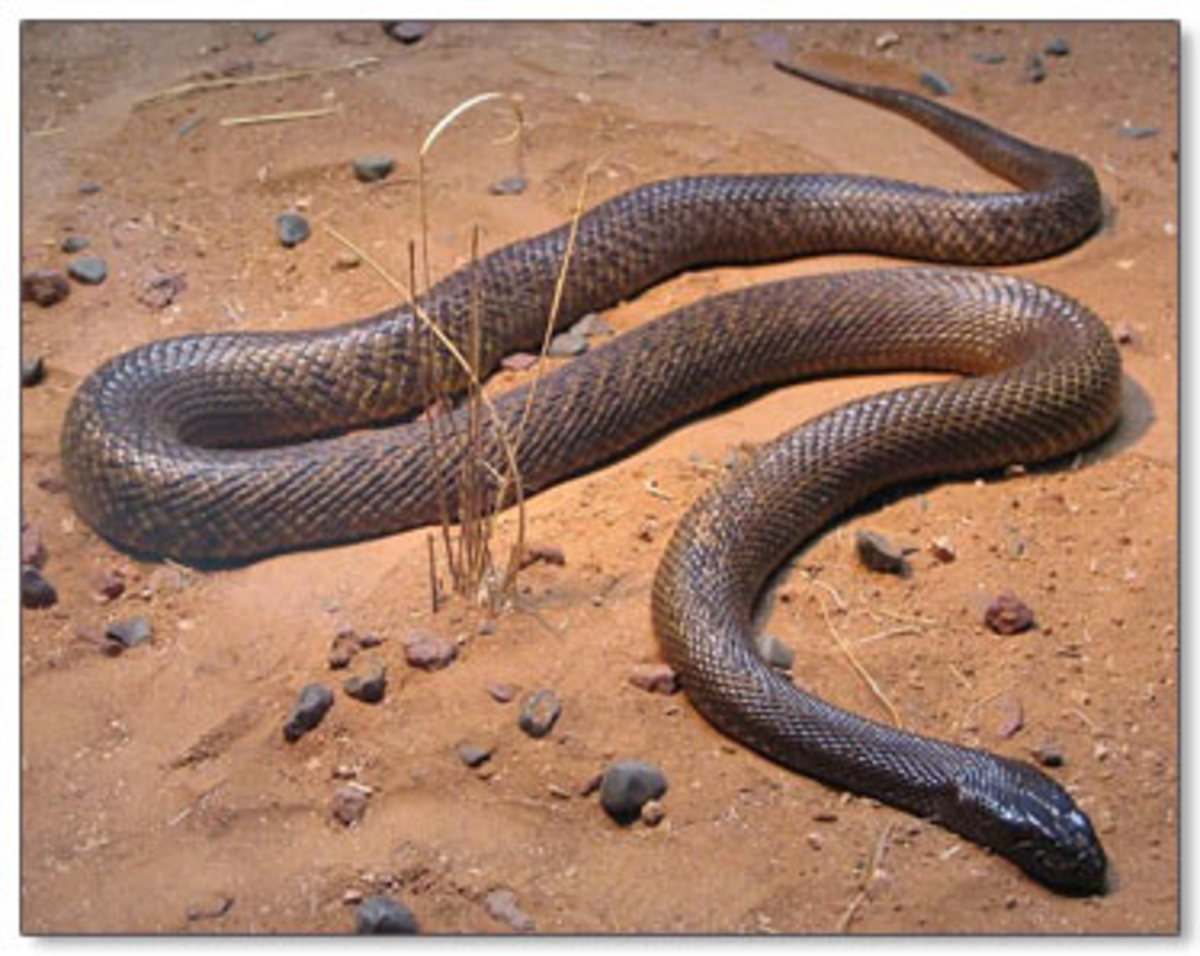
Very Large Adult Southern Pacific Rattler.  Photo taken near Angelus Oaks, California.
Very Large Adult Southern Pacific Rattler. Photo taken near Angelus Oaks, California.
Source: Jon Siess, photographer
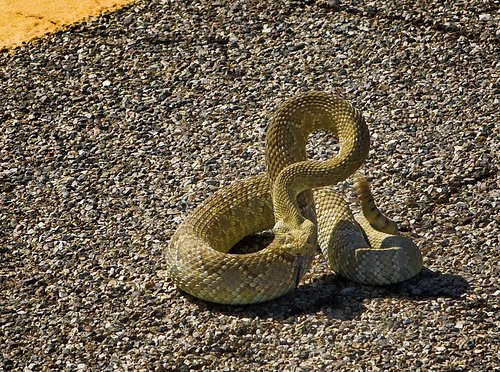
Mojave Green Rattlesnake in a defensive pose.
Source: Google advanced images.com
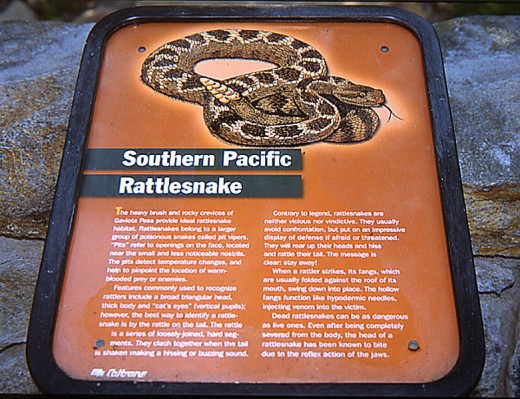
An effort to warn and advise the Public before entering the National Forest System.
Source: California Parks System
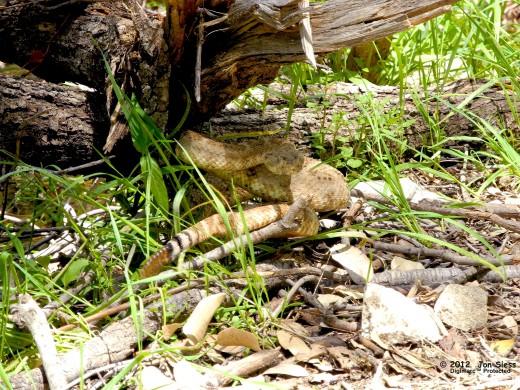
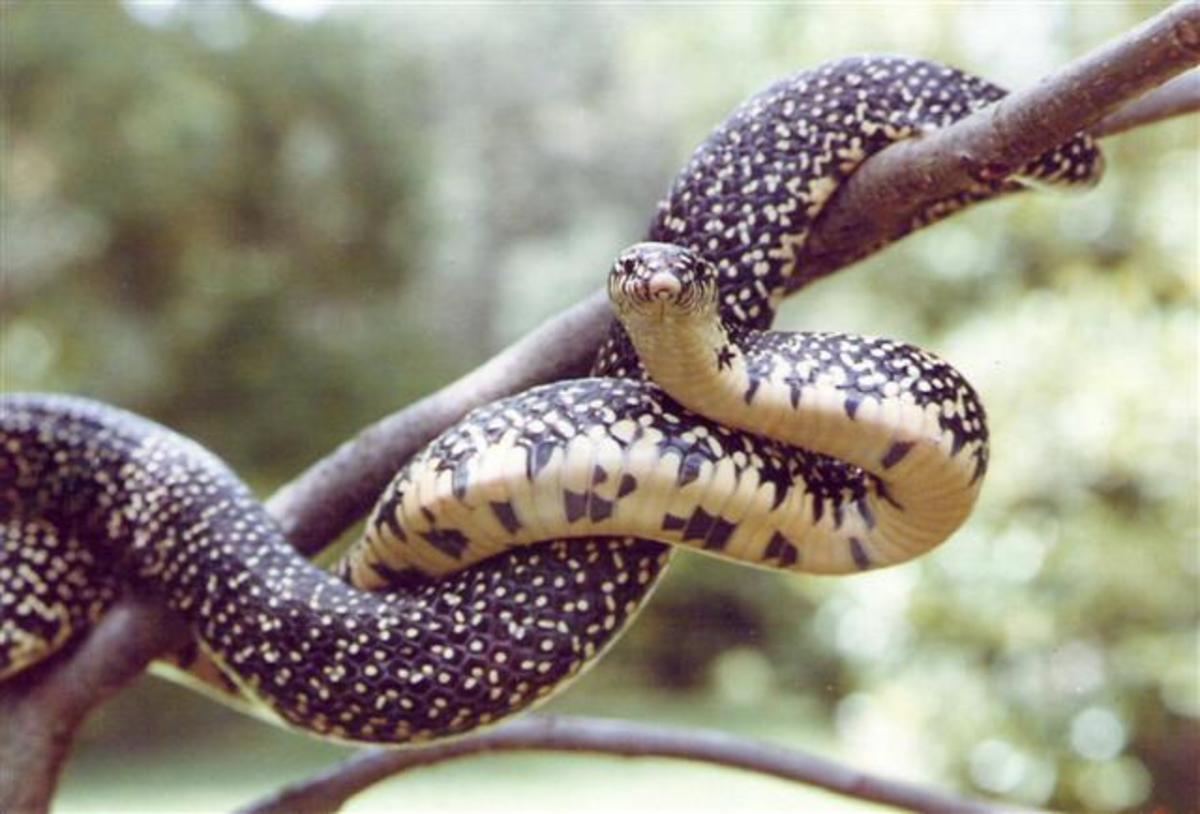
I nearly stepped on this one during a recent Spring hike..is it a Mojave Green or pale, greenish species of the Southern Pacific?  All inquiries and comments welcome!
I nearly stepped on this one during a recent Spring hike..is it a Mojave Green or pale, greenish species of the Southern Pacific? All inquiries and comments welcome!
Note the rattles.  I felt this was an unusual coloration for a Southern Pacific..it seemed to have a greenish tinge to its skin. (Full width shown in preceding photo)
Note the rattles. I felt this was an unusual coloration for a Southern Pacific..it seemed to have a greenish tinge to its skin. (Full width shown in preceding photo)

Sounds Like Sci-Fi, But This is Actually True!

An alarming new strain of super-toxic venom has been reported in California. Ordinarily this neurotoxic venom has only been associated with the Mojave Green rattlesnake, a snake usually found in desert and high desert terrain. According to Richard Dart, director of the Rocky Mt. Poison and Drug Center, the Southern Pacific Rattlesnake appears to be packing a neurotoxic whallop of a bite these days.

I am reminded of locals in the Cajon Pass area of San Bernardino County--talkative folk who have reported seeing the Mojave Green and the Southern Pacific mating. Is this possible? As ghastly as the prospect seems, it is not only possible, but a logical explanation according to Richard Dart. Other explanations include, weakening immune systems among snake bite victims (due to toxins in the air) or latent genes emerging from the Southern Pacific Rattlers. Other scientists have speculated that the Southern Pacific, due to its nature, is not killed as often as more visible and "noisy" rattlers, thus allowing the species to move into a niche that would incease their venom potential.

The range of the dreaded Southern Pacific is shown in the first photo, in green. It includes areas such as Ventura County, Los Angeles County, Riverside County, San Bernardino County and even Catalina Island.

Dr. Sean Bush of Loma Linda University Hospital, is a local celebrity, and known as the "snake bite doctor." He has concluded that the majority of snake bites in California are due to the Southern Pacific (a sub species of the Western Diamondback).He, too, has reported far more neurological symptoms in snake bite victims than ever before. The implication is--be safer than ever before when hiking or camping, and keep both eyes glued to the trail and shrubbery.

Neurotoxic venom causes rapid respiratory arrest, seizures, fainting and other disabling symptoms. It is said to be ten times more potent than regular snake venom. If a species with a range such as the Southern Pacific is now producing such neurotoxic strains, it behooves us to be especially aware and alert. As to why this is occurring, explanations vary, and are rooted in mystery.

Comments

AliciaC profile image

AliciaC Level 7 Commenter 11 months ago

Thanks for the information. It's certainly alarming news about the new, more dangerous snake toxin. Hikers are going to have to be a lot more careful now!

Ghost32 profile image

Ghost32 Level 8 Commenter 11 months ago

If the story of the Mojave green's genesis is true--and on my Hub, people have left comments that point toward that being the case--rattlers are actually capable of interbreeding with other venomous snakes (such as cobras). Which would inevitably produce a rattler with a neurotoxic venom component.

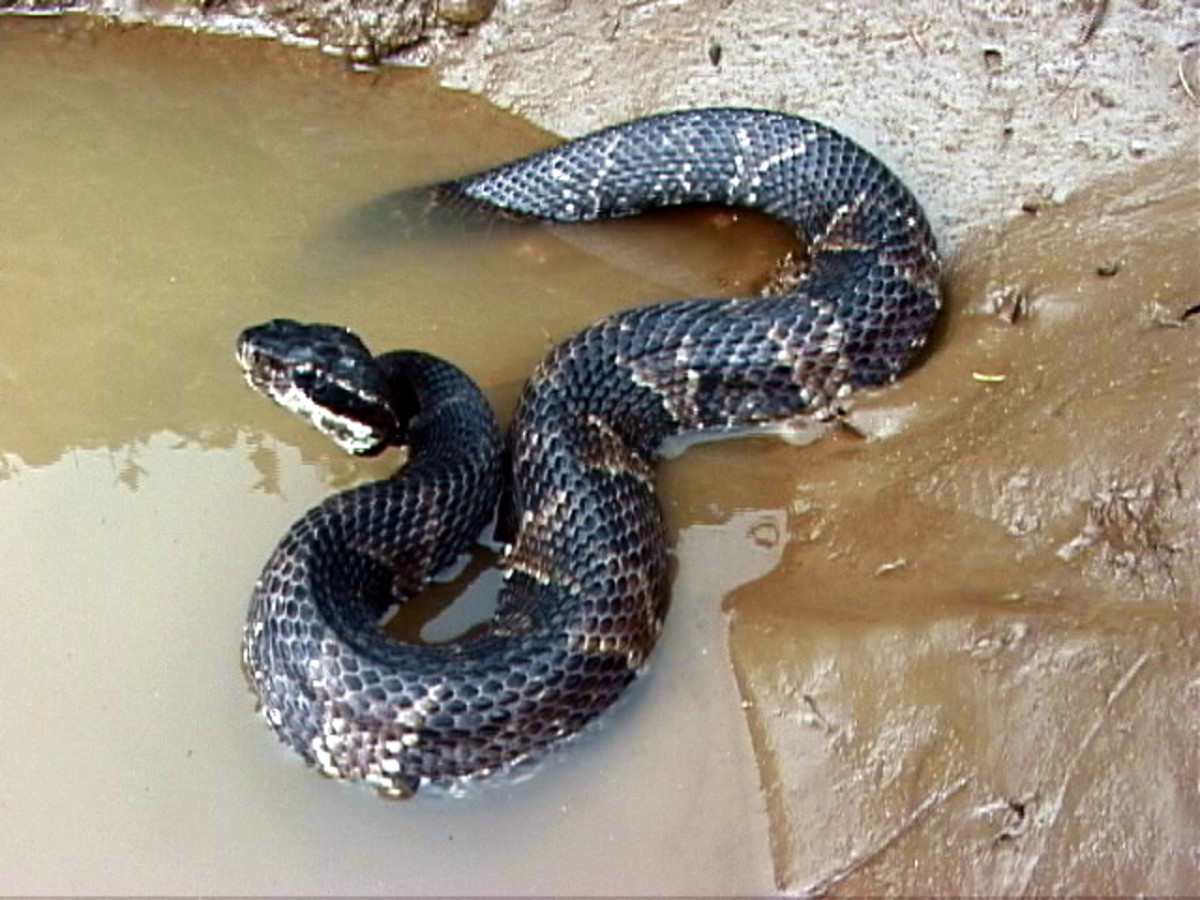
And...doesn't that big black Sothern Pacific look less "rattler-like" and a bit more like an ultra-venomous swimming sea snake (or even a king cobra, which would certainly add to any rattler's size in subsequent generations)...???

GarnetBird profile image

GarnetBird Hub Author 11 months ago

I agree!! Ten years ago I recall locals in the Cajon Pass High Desert talking about Mojaves and Pacifics mating--it almost seemed like a local folktale or legend but possibly is the actual truth as to what is happening here!

Lyn.Stewart profile image

Lyn.Stewart Level 4 Commenter 11 months ago

wow that's amazing ... we don't have poisonous snakes in New Zealand ... we don't even have poisonous spiders. I will definately read up more on snakes ~ thanks everyone for teaching me something

diogenes profile image

diogenes Level 7 Commenter 11 months ago

Hi Garnetbird. The envenonated thumb injury you show was the result of a Brown Recluse spider bite, not a Black Widow. The Widow bite can indeed be fatal (rare) but does not cause tissue damage like this.

Interesting article re rattlers

diogenes profile image

diogenes Level 7 Commenter 11 months ago

...I forgot to add that most rattlers have hemotoxic venom. The South Pacific Rattlesnake may be the only member of the species having both Hemotoxin and Neurotoxin as components of their venom, which might be one reason for their causing so many problems. There are many other factors ..Bob

Alastar Packer profile image

Alastar Packer Level 8 Commenter 11 months ago

Hi GarnetBird. Richard Dart needs to clarify his theory on the mating a little better. The Mojave Green and Southern Pacific can probably no more mate than Blue Jay birds and Robins; though I don't know how biologically close they are. The latest myth on the east coast has Copperheads mating with Black snakes...absolutely impossible in the wild. Very interesting article, thanks.

diogenes 11 months ago

That may be true, AP, I haven't studied the genetics, but we now hear lions and tigers have born the Liger!! Bob

Becky 11 months ago

diogenes, the Liger is impossible in nature. They do it in zoos but they will not mate in nature. They are also sterile. Like a mule is.

GarnetBird profile image

GarnetBird Hub Author 11 months ago

Wow--great comments--I see these Southern pacific Rattlers all the time. It's threatening to feel that they have morphed and somehow carry a neurotoxic venom. I removed the one photo as it might have been misrepresented on Google. I was surprised that Richard Dart conceded that they could mate. His comments if anyone is interested can be found in Scientific American. Thanks for reading! This almost sounds like Sci Fi to me and seemed very in triguing.

diogenes profile image

diogenes Level 7 Commenter 11 months ago

Hi Becky. The fact that tigers and lions have bred in captivity is the point, not whether they desire to do so in the wild. Many - most - species cannot produce young with one another, in or out of captivity. It would not suprise me if certain snakes, especially from similar types, might be able to produce young...Bob

GarnetBird profile image

GarnetBird Hub Author 11 months ago

Interesting!!

Thank you so much for commenting and reading.

Alastar Packer profile image

Alastar Packer Level 8 Commenter 11 months ago

Here's were I'm lacking in knowledge apparently: I was under the impression that the pit vipers(rattlers, coppers,moccasins) carried a muscular- skeletal type venom vs say the coral snakes neuro-toxin. Diogenes revelation on the S.P. Rattler having both is frankly rather stunning. The whole thing is intriguing and a bit confusing.Is the South Pacific snake the only one with this anomaly? After that's answered perhaps we can move on to another question or possibility.

GarnetBird profile image

GarnetBird Hub Author 11 months ago

It has never been cited before as having any components which are turning up now. I don't know of any other rattlesnake species which has "morphed" into a neurotoxic package like this one has. ha. It's kind of alarming for those of us who encounter it frequently. I used to see one almost weekly in the Cajon Pass Area.

Lyn.Stewart profile image

Lyn.Stewart Level 4 Commenter 11 months ago

Bill Hayes , a professor of biology at Loma Linda whose expertise includes rattlesnakes, to study the venom of the Southern Pacific. Hayes enlisted help from the University of Texas, El Paso, which is equipped to analyze venom. Researchers wondered if the Southern Pacific snake, which lives in the mountains and foothills of the Inland region, had interbred with the Mojave Green from the high desert.

Researchers checked live Southern Pacific rattlesnakes near Mojave Green habitat that did not have neurotoxins. For comparison, they analyzed snakes in Garner Valley, far from the Mojave Green. Four were caught near Hurkey Creek, an area of superb mountain bike trails. Another was captured across Highway 74 by Lake Hemet. Surprisingly, all five contained Mojave Green-like neurotoxins. "It was totally unexpected," Hayes said.

found this info and thought it might be pertinant

diogenes 11 months ago

The fact that several Rattlesnakes - and others of the pit viper family, either have neurotoxic and/or a combination of the two venom groups - neuro and haemotoxin, MAY indicate interbreeding somewhere in the reptile's evolution - or it may have other causes, such as local predator and defense requirements.

There is another rattler living in Baja (islands) with the often considered more dangerous neurotoxin. Bob

christopheranton profile image

christopheranton Level 7 Commenter 11 months ago

Thanks for the warning.

I wont be going anywhere near Southern California any time soon.

GarnetBird profile image

GarnetBird Hub Author 11 months ago

LYN that is amazing news--absolutely fascinating! I was not aware of that study.Christopheranton, most places in California are free of this dangerous snake, which does not live around population centers or the beaches,et (Mostly it prefers dry canyons, mountains, etc.)So come on out anyway!

PADDYBOY60 profile image

PADDYBOY60 Level 5 Commenter 8 months ago

Very interesting article! I am always interested in whats going on in our reptile world. I am no expert on western breeds, although I do read as much as I can on them. I do believe in a certain amount of evolution, that is that animals will change and adapt to new environments and habitat. This also includes their defenses. As far as crossbreeding, I really don't think they would. But I have been wrong before!

GarnetBird profile image

GarnetBird Hub Author 7 months ago

Thank you paddyboy--it is a strange situation here..not too comforting if one likes to hike..

diogenes profile image

diogenes Level 7 Commenter 7 months ago

Afterwoed.

Snake venom is a very complex combination of many proteins, enzymes and other chemicals which becomes a saliva refined in the poison gland and held in sacs ready for use. That there is so much variation in different reptiles is due to the ad-mix of all these components. Bob

GarnetBird profile image

GarnetBird Hub Author 7 months ago

I understand that the neuro-toxic venoms are especially lethal. We had a sad case here in California. A teacher was bitten by a dreaded Mojave Green and died while calling 911. Thank you for your timely comments.

diogenes 7 months ago

Neurotoxic is considered "worse" overall, but it depends on many variable: how much venom injected,site of bite (trunk neck and face being worst), size, age and weight of victim, antivenin avaible; first aid, and so on. No hard and fast rules except don't get bit in the first place! Bob

GarnetBird profile image

GarnetBird Hub Author 7 months ago

You are soooo right, Diogenes--I enjoy your comments and value your input!

diogenes profile image

diogenes Level 7 Commenter 7 months ago

My great pleasure, GB Bob

Submit a Comment
Members and Guests

Sign in or sign up and post using a hubpages account.


    • No HTML is allowed in comments, but URLs will be hyperlinked
    • Comments are not for promoting your Hubs or other sites

    Please wait working